
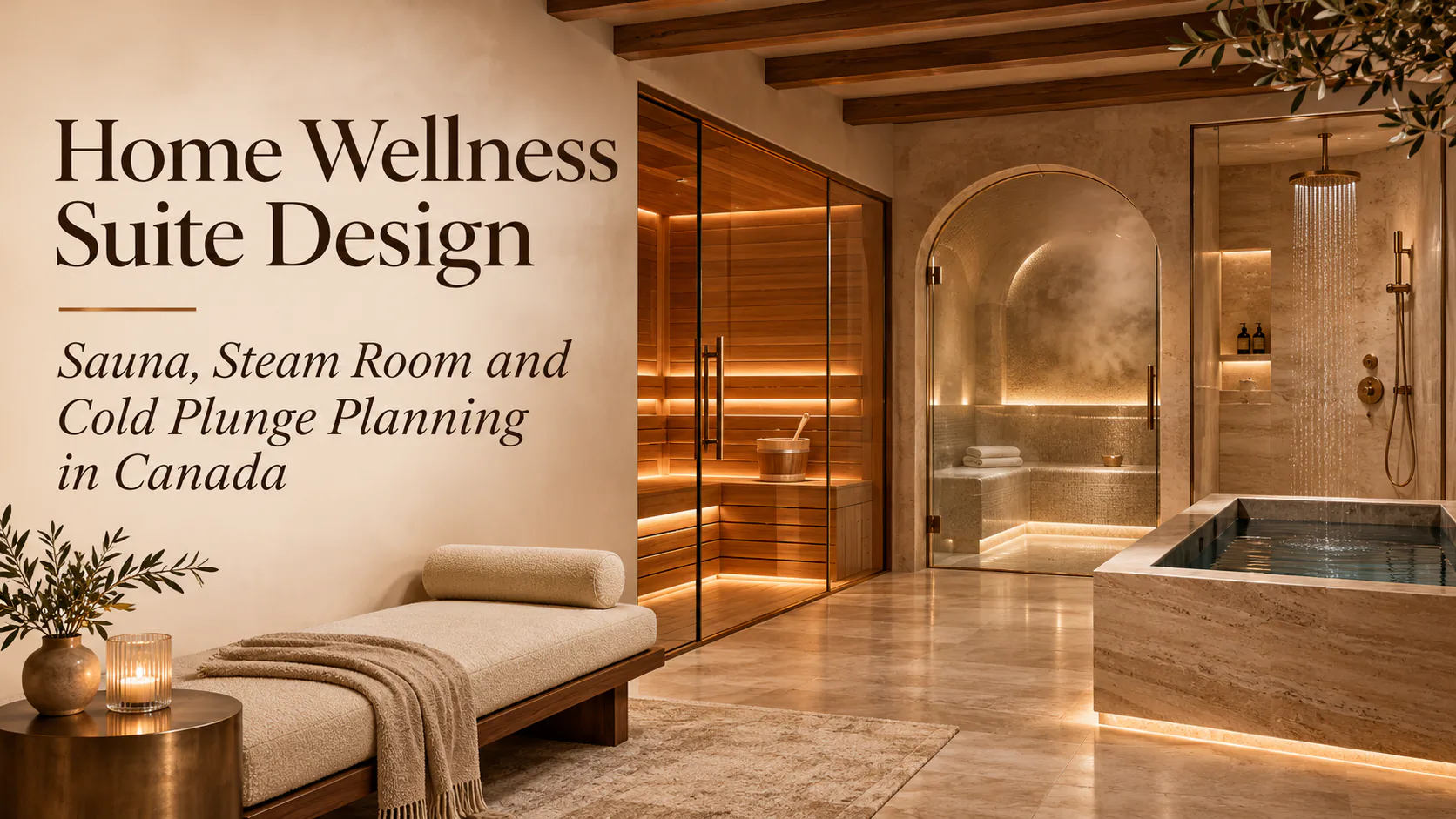
If you are planning a luxury home in Canada, a home wellness suite can bring a private spa experience under your roof. The starting point is understanding what each feature needs before you choose products.
A sauna, steam room and cold plunge each have their own space, water, electrical and ventilation requirements. Plan them together early, because changes during construction are costly.
In this article, we will walk you through space planning, feature selection, technical requirements and materials. We also explain costs and how to bring the right professionals into your project.
What Is a Home Wellness Suite?
A home wellness suite is a dedicated space that brings several wellness features together in one planned area. It usually combines heat, steam, cold and rest.
Common elements include:
- A traditional or infrared sauna
- A steam room or steam shower
- A cold plunge tub
- A shower and changing area
- A relaxation or recovery space
The difference lies in the planning. A single product fills a corner of a room. A fully planned home spa connects each feature through layout, materials and building services.
How Much Space Do You Need for a Home Wellness Suite?
Space requirements depend on the products you select, the number of users and the layout. Therefore, choose your features before you fix the room size.
Choosing the Right Location in Your Home
Many Canadian homeowners place their wellness suite in the basement. Basements often offer space, privacy and easier access to plumbing.
Other options include a room beside an existing bathroom or a space connected to a home gym. For new custom homes, the suite can be planned into the design from the start. This is usually the simplest route.
Planning a Practical Layout
A good layout lets users move easily between the sauna, shower and plunge. It also leaves room for changing and resting between sessions.
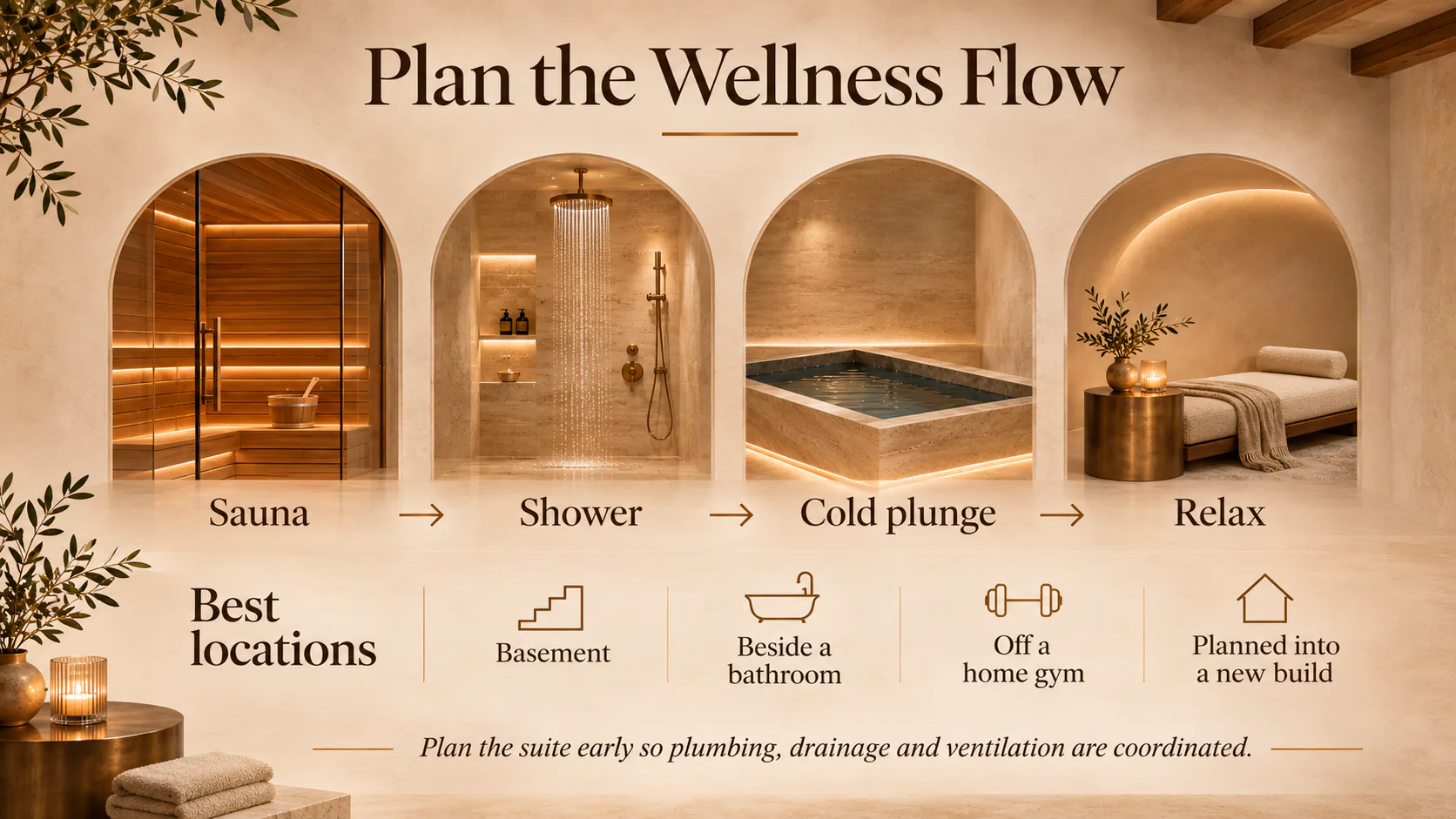
Slip-resistant surfaces and safe access are essential in wet areas. You also need clear access to equipment for servicing and maintenance.
Confirm final dimensions against manufacturer specifications and your professional plans. Product sizes vary widely, even within one category.
How Do You Choose Between a Sauna, Steam Room and Cold Plunge?
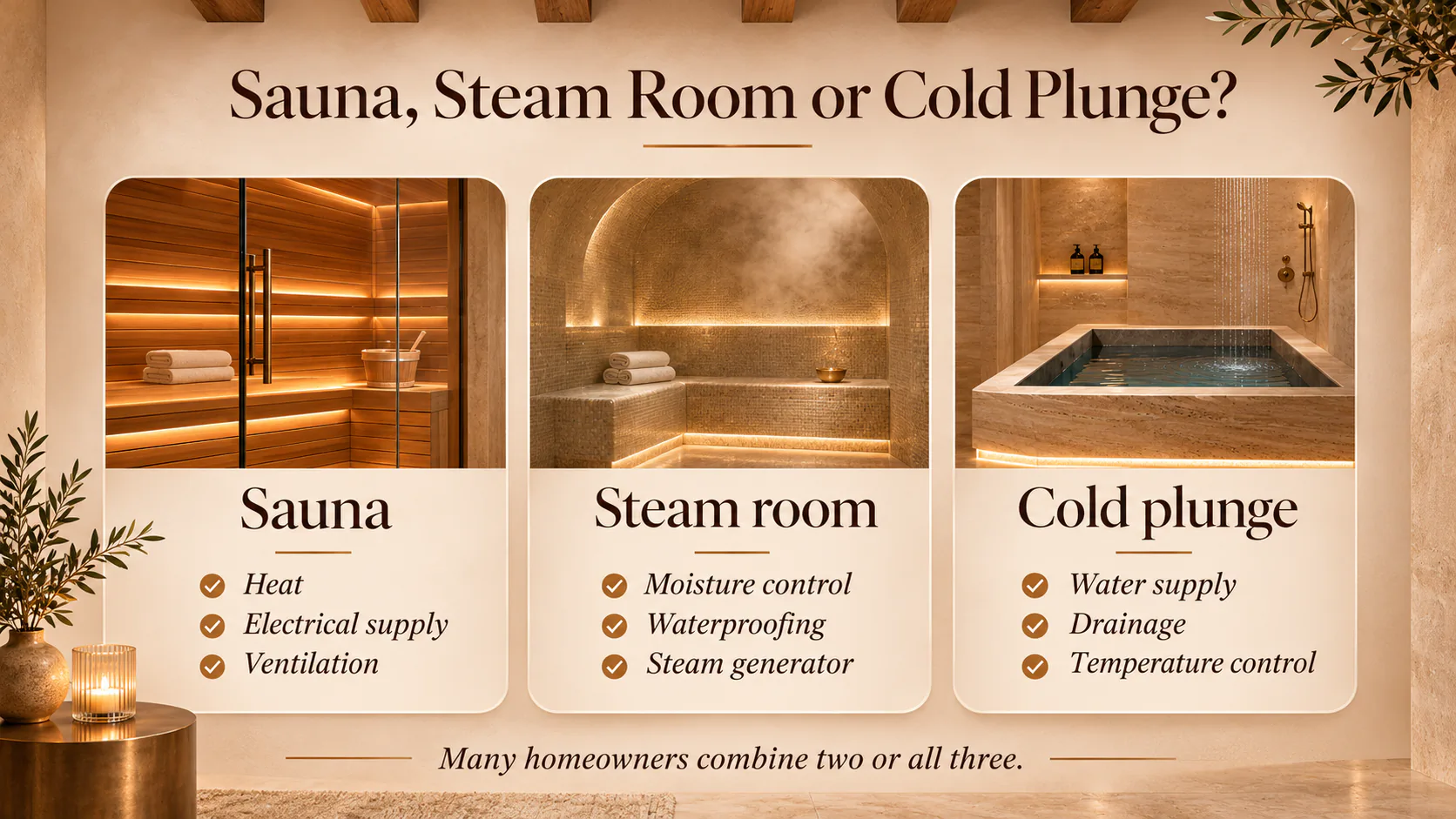
Each feature delivers a different experience and places different demands on your home. Many homeowners combine two or all three.
| Feature | Main planning consideration |
|---|---|
| Sauna | Heat, electrical supply and ventilation |
| Steam room | Moisture control, waterproofing and steam generation |
| Cold plunge | Water supply, drainage, load and temperature control |
Traditional vs. Infrared Sauna
A traditional Finnish sauna heats the air, which then warms the body. An infrared sauna uses radiant panels to warm the body more directly.
Traditional saunas typically need a dedicated electrical supply for the heater. Infrared models may have lighter power needs, but this depends on the product.
Both require heat-tolerant materials and some ventilation. Traditional saunas generally need more space around the heater as well.
What to Consider When Planning a Steam Room
A steam room relies on a steam generator, which needs water and electrical connections. The generator also needs an accessible location for servicing.
Waterproofing and vapour management are critical. Without them, moisture can damage the walls, ceiling and structure around the room.
Seating, walls and floors must suit constant heat and humidity. A sloped ceiling also helps condensation run off rather than drip on users.
Choosing a Cold Plunge for Your Home
Cold plunges come as freestanding units or built-in pools. Freestanding units are simpler to install, while built-in options offer a more integrated look.
Either way, plan the plumbing, drainage and electrical supply for cooling equipment. Water filtration and temperature control determine how easy the plunge is to maintain.
Leave space to access the equipment for cleaning and servicing. A plunge that is hard to maintain soon goes unused.
What Technical Requirements Should You Plan Before Installation?
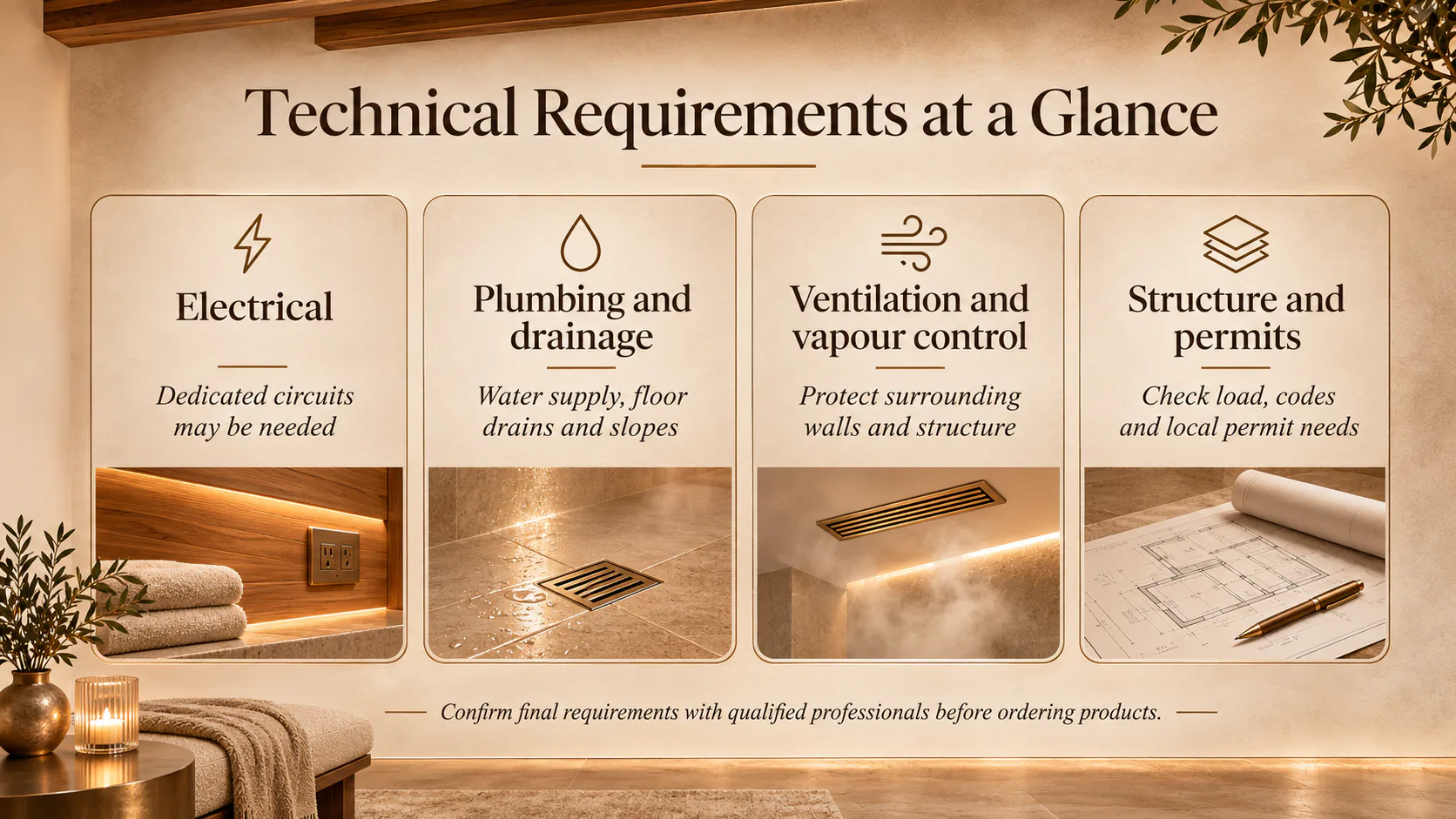
Technical requirements decide what your space can support. Therefore, involve qualified professionals before you order major equipment.
Electrical, Plumbing and Drainage
Sauna heaters, steam generators and plunge chillers can each need dedicated electrical circuits. Your existing panel may not have enough capacity for all three.
Steam rooms and cold plunges also need a water supply and proper drainage. Floor drains and slopes must be planned before finishes go in.
Ventilation and Moisture Control
Steam rooms and other wet areas produce large amounts of moisture. Without proper ventilation and vapour barriers, that moisture spreads into surrounding walls and framing.
This can lead to mould, rot and costly repairs. Moisture management protects both the suite and the rest of your home.
Structural Considerations and Canadian Building Requirements
A filled cold plunge can be very heavy. Upper floors may need a structural assessment before installation.
Permits may also be required for electrical, plumbing or structural work. Requirements vary by province and municipality, so confirm them with your project professionals.
Final technical specifications depend on the products you select, your location and a professional assessment. Treat any general guidance as a starting point only.
Which Materials and Finishes Work Best for a Luxury Home Wellness Suite?
Materials shape both the look and the lifespan of your wellness suite. Each surface must suit the heat or moisture of its location.
Stone, Porcelain and Moisture-Resistant Finishes
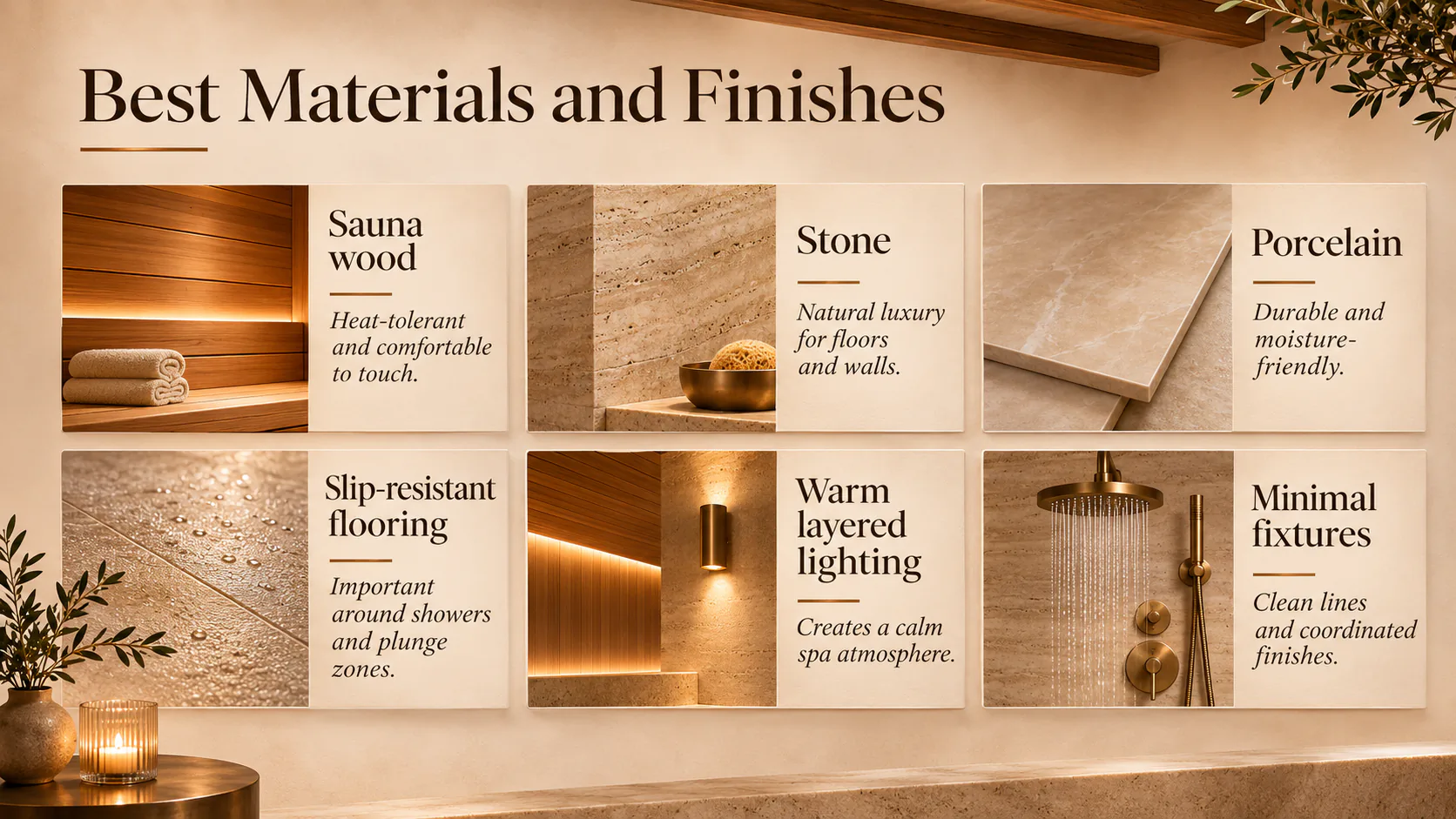
Stone and porcelain work well on floors and walls in wet areas. Choose finishes with suitable slip resistance, especially around showers and plunges.
However, not every surface suits high heat or constant steam. Check each material’s compatibility with its specific application before you commit.
Wood and Natural Materials
Wood remains the classic choice for sauna interiors. Heat-treated and low-resin species stay comfortable to touch at high temperatures.
Many luxury suites combine sauna wood with stone, porcelain or natural wall paneling materials in surrounding areas. Wood used outside the sauna must still handle high humidity.
Lighting, Fixtures and Finishing Details
Warm, layered lighting creates a calm atmosphere. Minimalist fixtures and quality shower fittings complete the spa feel.
Consistent finishes tie the suite together. Coordinated Italian products from selected European brands can create one cohesive aesthetic across every zone. Still, confirm each product is rated for heat or wet use.
Building your own wellness retreat? Explore premium Italian materials, fixtures and wellness products for your home spa project. Explore our Italian collections.
How Much Does a Home Wellness Suite Cost in Canada?
The cost of a home wellness suite varies widely. Fixed price ranges are unreliable, because every home and specification is different.
Instead, budget around the main cost factors:
| Cost factor | Why it affects the budget |
|---|---|
| Number and type of features | Each feature adds equipment, services and space |
| Size and condition of the space | Older or unfinished spaces need more preparation |
| Electrical and plumbing upgrades | New circuits, supply lines and drains add cost |
| Waterproofing and ventilation | Essential for steam and wet areas |
| Custom vs. freestanding products | Built-in features cost more to design and install |
| Imported Italian fixtures and finishes | Pricing, shipping and lead times vary by brand |
| Installation and professional fees | Designers, engineers and trades each charge separately |
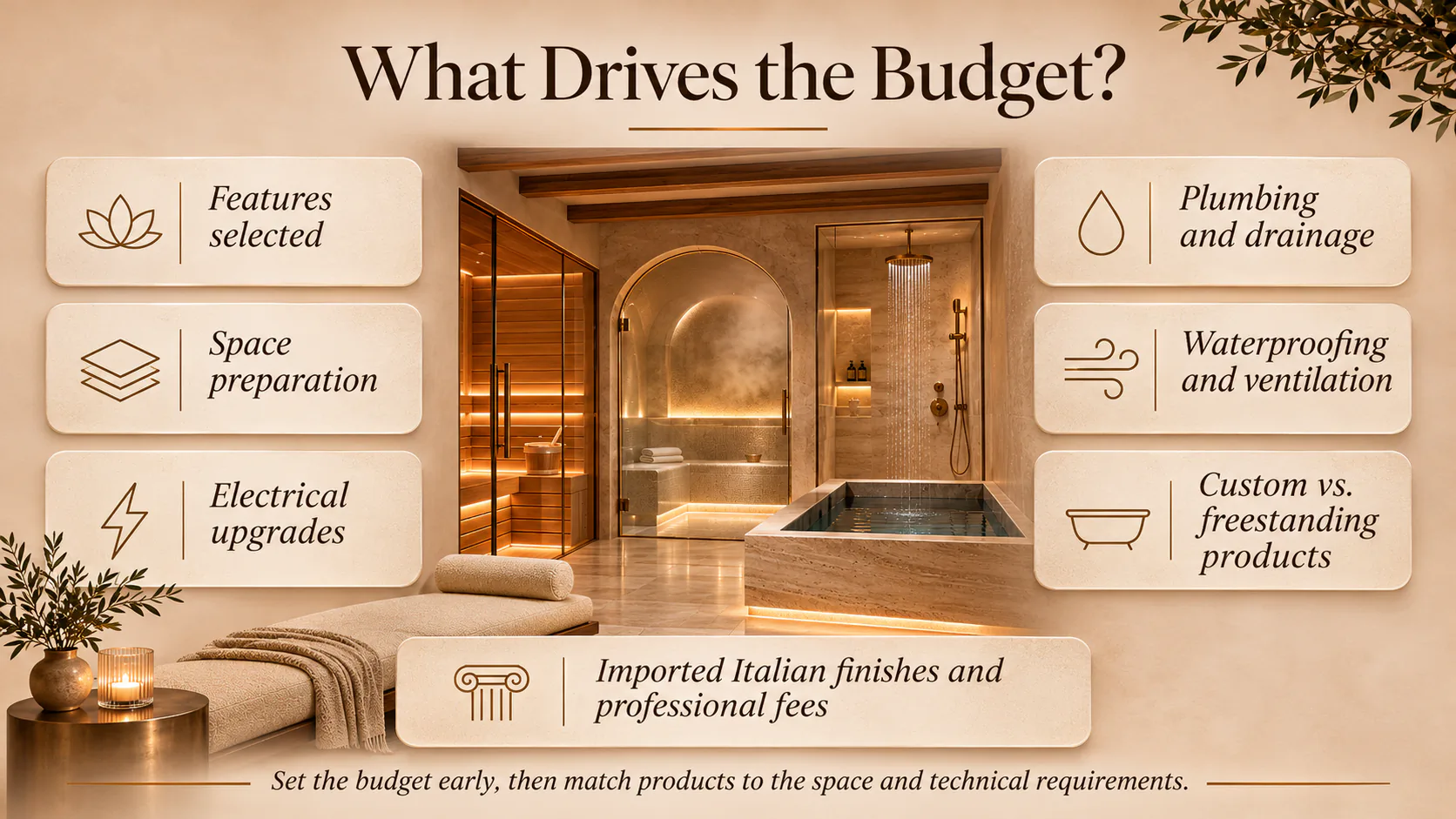
Set your budget early, then request product specifications and project-specific estimates. This helps you avoid ordering products your space cannot support.
How Do You Plan a Home Wellness Suite With the Right Professionals?
A successful wellness suite combines clear goals, qualified professionals and compatible products. The order in which you address them matters.
Start With Your Wellness Goals and Budget
Decide which features you want and how often you will use them. Then consider your available space and the aesthetic you prefer.
These answers guide every later decision, from layout to finishes.
Involve Qualified Design and Construction Professionals
Architects, interior designers, contractors and trades each play a role. They assess the layout, building requirements and installation needs.
In Canada, some design titles and services are regulated. For example, the title “Interior Designer” is protected in Ontario, as ARIDO explains. Therefore, check each professional’s qualifications for the work they will perform.
Source Compatible Products and Materials
Before ordering, confirm each product’s dimensions, technical requirements and delivery timeline. Imported products can take several months to arrive.
Compatibility matters too. A steam generator, enclosure and finishes must work together as one system.
Coordinate Product Selection With Project Planning
Product choices and project plans should develop together. This prevents late changes when a product does not fit the space or services.
La Firma Casa helps homeowners connect both sides. We provide access to Italian brands and a network of qualified design and project professionals.
Why Consider Italian Wellness Products and Finishes for Your Home Spa?
Italian design is known for refined bathroom and wellness products. Many brands offer coordinated collections, so finishes match across the suite.
Craftsmanship and material selection are central to these brands. For example, Megius offers Italian shower enclosures, Finnish saunas and hammam steam solutions.
Italian products also suit custom homes and luxury renovations. Many are not readily available through conventional Canadian retail channels. Sourcing through a specialist gives you access to options your neighbours may not find.
Plan Your Home Wellness Suite With La Firma Casa
A wellness suite that feels as good as it looks starts with early planning. Technical suitability, material selection and coordination all shape the result.
La Firma Casa helps homeowners across the Greater Toronto Area bring those elements together. We provide access to selected Italian wellness, bathroom and interior brands. We also help you explore suitable products and finishes for each zone.
For design, technical review and regulated work, we connect you with our network of qualified professionals. Each service is carried out by an appropriately qualified provider.
Planning a private wellness suite? Explore our services for homeowners, then discuss your project with our team.
Frequently Asked Questions About Home Wellness Suites
Can I install a sauna, steam room and cold plunge in my basement?
Often, yes. Basements usually offer space and easier plumbing access. However, you must plan drainage, ventilation, electrical capacity and moisture control carefully. A qualified professional should assess your basement before you order equipment.
Does a home wellness suite require permits in Canada?
It often does. Electrical, plumbing and structural work typically require permits. Requirements vary by province and municipality. Therefore, confirm permit needs with your contractor or design professional before work begins.
Can I add a steam room to an existing bathroom?
In many cases, yes. However, the space needs proper waterproofing, vapour management, ventilation and a location for the steam generator. A sealed enclosure and suitable finishes are also essential. Have the existing bathroom assessed first.
What should I consider before buying a cold plunge tub?
Consider size, weight when filled, drainage, electrical supply, filtration and temperature control. Decide between a freestanding or built-in model. Also check that your floor can support the load and that equipment remains accessible.
Where can I source luxury Italian wellness products in Canada?
Specialist importers provide access to brands not sold through regular retail. La Firma Casa sources Italian wellness, bathroom and interior products for homeowners and professionals across the Greater Toronto Area.
Disclaimer: The information provided in this blog is for general informational purposes only. For professional assistance and advice, please contact experts.
About the author

Written by
Interior design specification consultancy
La Firma Casa — curating European design excellence for Canadian interiors. Interior design specification consultancy with an unwavering commitment to quality.
Connect on LinkedIn
Reviewed by
Ummer Mughal, Founder of La Firma Casa and a practising architect