
Italian leather is the most abused label in furniture. It can describe a full-grain hide tanned in Tuscany on a sofa built in Brianza, or a thin split leather on a frame made nowhere near Italy, and both hang the same tag. The price gap between them is ten thousand dollars, and the quality gap is twenty years.
In this guide, we will show you how to tell them apart: what the label legally means, how leather grades work, which brands earn their prices, and what a genuine Italian leather sofa really costs in Canada.
What "Italian Leather Sofa" Actually Means
The phrase hides two separate claims, and sellers rely on you not separating them. "Italian leather" describes the hide, meaning it was tanned in Italy, home of the world’s best tanneries. "Made in Italy" describes the sofa, meaning the frame, suspension, and upholstery work were done there.
A sofa can carry Italian leather and be built anywhere. The pieces worth the investment carry both: Italian hides on Italian-built frames, from workshops that publish their factory name, not just a collection name. If a retailer can name the leather’s origin but not the sofa’s, you’ve learned what you needed to know.
Leather Grades Explained in Plain Language
Leather quality comes down to two questions: which layer of the hide you’re getting, and how it was finished. The layer decides durability, and the finish decides feel and maintenance.
| Grade / Finish | What It Is | What It Means for You |
|---|---|---|
| Full-grain | The complete top layer, natural grain intact | Strongest, ages into a rich patina, highest price |
| Top-grain | Top layer lightly sanded and refinished | Durable and uniform, the standard of premium sofas |
| Split / bonded | Lower layers, or scraps pressed with glue | Cracks and peels within years, avoid at luxury prices |
| Aniline finish | Dyed through, no protective coat | The softest, most natural look, but stains and fades easily |
| Semi-aniline | Dyed through with a light protective coat | Natural feel with real-life durability, the sweet spot for most homes |
| Pigmented / protected | Opaque coated surface | Toughest and most uniform, less natural to the touch |
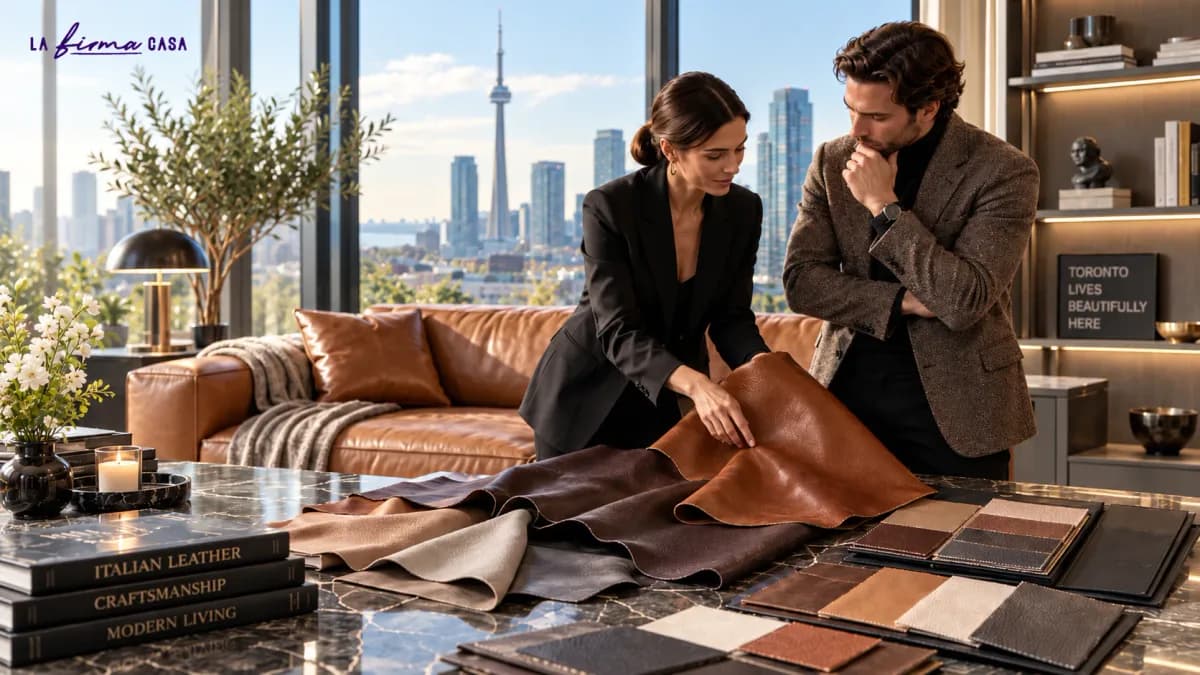
Italian makers add their own shorthand: leather category numbers, usually Cat. 1 through Cat. 5 or similar. Low categories are heavily corrected, uniform hides, while high categories are full-grain and aniline-dyed. Ask which category your quote includes, because two prices for "the same sofa" often differ only here.
Which Leather Suits Canadian Homes
Canada is hard on leather in ways showrooms don’t mention. Forced-air heating dries hides through six months of winter, and big south-facing windows fade unprotected aniline noticeably within a few years.
Match the finish to how your room actually lives:
- Children or pets at home: choose semi-aniline on a full- or top-grain hide, which keeps the natural feel with enough protection for daily life.
- Bright, south-facing room: choose a protected leather, or add window film, because unshielded aniline fades visibly in a few years.
- Formal, low-traffic room: pure aniline rewards you here, with the softest hand and the richest patina.
- Any room, any leather: keep the sofa a hand’s width from heating vents and condition it once or twice a year through the dry season.
Match the Brand to What You Want
The market runs in three tiers: heritage icons like Poltrona Frau and Baxter at the top, specialist family ateliers in the middle, and design-led production like Natuzzi Italia below. The ateliers are where knowledge buys the most sofa per dollar, because you get icon-level hides and construction without the logo premium, and they are the workshops we represent directly in Canada.
Start with what you want the sofa to be, and the brand follows:
- If you want a full-grain sofa that ages into an heirloom, Ulivi Salotti is the leather specialist. The Tuscan atelier works in rich full-grain and rare vegetable-tanned hides with goose-down cushioning, and every piece is built in its own factory.
- If you want classical luxury with presence, Ceppi Style builds statement pieces on solid-wood frames with goose-feather backs and wide leather customization, in the brand’s "Italian Touch" tradition of artisan glamour.
- If you want clean, contemporary comfort for daily living, Gyform focuses on modern upholstery with tailored lines that suit condo and modern-home proportions.
- If you want the museum names, the heritage icons deliver, at heritage prices. We’ll tell you honestly when an atelier gives you the same hide for a third less.
Every brand above is available through our brand portfolio, with factory technical sheets, leather samples, and configuration pricing before you commit.
Real Canadian Pricing in 2026
Here is what genuine Italian leather sofas actually cost in Canada, landed and delivered:
| Tier | 3-Seat Sofa (CAD) | Sectional (CAD) |
|---|---|---|
| Design-led production (e.g., Natuzzi Italia) | $6,000 – $12,000 | $10,000 – $18,000 |
| Specialist ateliers (e.g., Ulivi Salotti) | $9,000 – $20,000 | $15,000 – $30,000 |
| Heritage icons (e.g., Poltrona Frau) | $15,000 – $40,000+ | $25,000 – $60,000+ |
Within each tier, the leather category moves the price more than the model does. Stepping the same sofa from a Cat. 2 protected leather to a Cat. 5 full-grain aniline can add 30 to 50 percent, which is why two quotes for one design can sit thousands apart.
Note: A "genuine Italian leather" sofa advertised at $1,999 is telling you its grade. At that price, you’re buying split or bonded leather on the wear surfaces, and it will look its price within three winters. Genuine full Italian construction has a cost floor, and it isn’t there.
How to Verify Quality in the Showroom
The good news is that leather quality is checkable in person, with your hands. Run these tests before you believe any label:
- Press your palm flat on the seat for ten seconds. Real leather warms to your skin; synthetics and heavy coatings stay cool.
- Smell it. Genuine leather has an unmistakable natural scent, while bonded and faux smell of chemicals.
- Check the backs, sides, and underside of cushions. Budget makers put real leather only where you touch, and vinyl or split leather everywhere else, sold as "leather match."
- Ask for the leather category and the tannery or leather collection name in writing on the quote.
- Ask what’s inside: kiln-dried hardwood frames and quality suspension, because a twenty-year hide on a five-year frame is money wasted.
If any answer is vague, the sofa is answering for them.

Buy Direct From the Workshops
La Firma Casa represents Italian furniture makers directly in Canada, including the leather ateliers whose work fills this guide. Through our collections, you order in the exact model, configuration, and leather category you choose, with factory technical sheets and samples in hand before you commit, and full import and delivery handled for you, whether you’re a homeowner or buying for projects and retail.
We are not a design practice, but if your room needs professional design direction, we can connect you with experienced interior designers from our network and handle the sourcing behind their selections. Get in touch to see leathers, compare categories, and price your sofa directly from the source.
Frequently Asked Questions
How much does a real Italian leather sofa cost in Canada? Genuine Made-in-Italy sofas start around $6,000 for a three-seater and run past $40,000 for heritage brands. Anything far below that is using lower-grade leather, partial leather coverage, or offshore construction.
What is the best leather grade for a sofa? Full-grain is the strongest and ages best, while semi-aniline finishing gives it everyday durability. For most Canadian homes, semi-aniline full- or top-grain is the ideal combination.
Is Italian leather better than other leather? Italian tanneries lead the world in finishing quality and consistency, which is why global luxury brands buy there. But the label alone guarantees nothing; the grade and the construction decide the sofa.
How long does an Italian leather sofa last? A full-grain or top-grain sofa on a kiln-dried hardwood frame lasts 20 to 30 years with basic care, and the leather improves in character as it ages.
How do I know if "Italian leather" is genuine? Ask for the leather category, the tannery or collection name, and the country of construction in writing. Then apply the touch and smell tests, and check whether the backs and sides are real leather too.
About the author

Written by
Founder, La Firma Casa
Founder of La Firma Casa and a practising architect. Ummer Mughal writes on specifying Italian and European products for Canadian projects.
Connect on LinkedIn